
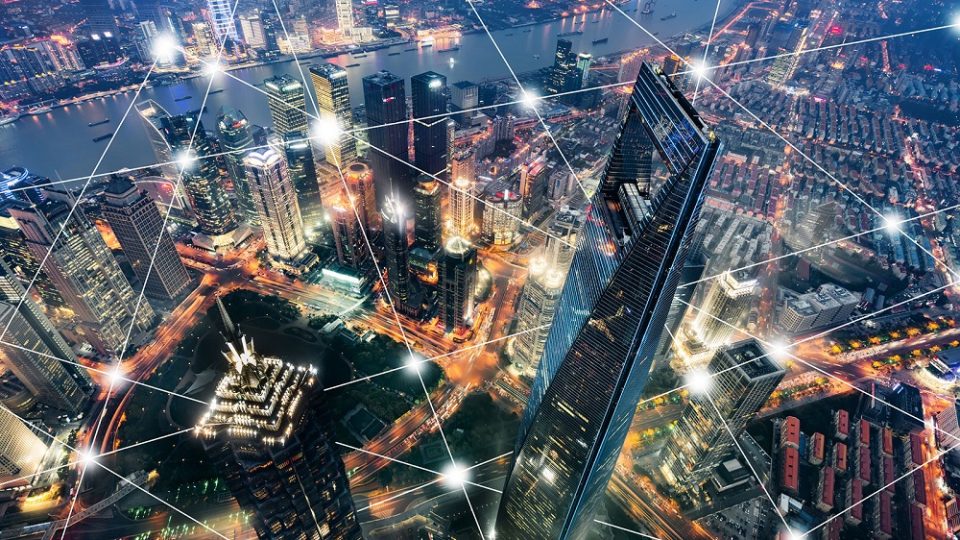
The internet is arguably the most significant technological achievement of the modern era. It has transformed from a niche military research project into a fundamental utility that powers global commerce, communication, and education. To understand the internet is to understand a complex web of hardware, protocols, and social structures that bridge the gap between physical reality and digital information.
The Architectural Foundation of the Web
At its most basic level, the internet is a network of networks. It is not a single entity owned by any government or corporation but a decentralized collection of millions of private, public, academic, business, and government networks. These networks are linked by a broad array of electronic, wireless, and optical networking technologies.
The physical backbone of the internet consists of massive fiber-optic cables that run across continents and under oceans. These cables carry data at the speed of light, ensuring that a request made in New York can be fulfilled by a server in Tokyo in a matter of milliseconds. Between these large pipes lie routers and switches, which act as the traffic controllers of the digital world, directing packets of data to their intended destinations based on standardized protocols.
The Role of Protocols
Data does not travel across the internet in a single, cohesive stream. Instead, it is broken down into small units called packets. For these packets to reach their destination and be reassembled correctly, every device on the network must follow the same set of rules, known as the Internet Protocol Suite (TCP/IP).
-
Transmission Control Protocol (TCP): This ensures that data is delivered reliably and in the correct order. If a packet is lost during transmission, TCP handles the request for retransmission.
-
Internet Protocol (IP): This acts as the addressing system. Every device connected to the internet has a unique IP address, which allows routers to know exactly where to send data.
-
Hypertext Transfer Protocol (HTTP/HTTPS): This is the foundation of data communication for the World Wide Web, defining how messages are formatted and transmitted between web browsers and servers.
From ARPANET to the Modern Era
The origins of the internet date back to the 1960s with the Advanced Research Projects Agency Network (ARPANET), funded by the United States Department of Defense. The goal was to create a communication system that could survive a nuclear strike by decentralizing data storage and transmission.
In the 1980s, the development of the Domain Name System (DNS) allowed users to type human-readable names like example.com instead of complex numerical IP addresses. However, the internet remained largely text-based and difficult to navigate until 1989, when Tim Berners-Lee invented the World Wide Web. By introducing HTML, URLs, and browsers, he made the internet accessible to the general public.
The Economic Impact of Digital Connectivity
The internet has fundamentally rewritten the rules of economics. It has lowered the barriers to entry for entrepreneurs and allowed for the rise of the “gig economy” and remote work. Today, the global digital economy is valued in the trillions of dollars, encompassing e-commerce, digital advertising, and cloud computing services.
E-commerce and Retail Transformation
The shift from physical storefronts to digital marketplaces has changed consumer behavior. Businesses can now reach a global audience without the overhead of traditional brick-and-mortar locations. This shift has also necessitated the development of secure digital payment gateways and complex logistics networks that can handle last-mile delivery with extreme efficiency.
The Rise of the Service Economy
Beyond selling goods, the internet has enabled the sale of services across borders. Software as a Service (SaaS) models allow businesses to rent powerful computing tools rather than buying expensive hardware. Additionally, platforms for freelance work have created a global labor market where specialized skills can be traded regardless of geographical location.
Social Implications and Communication
The way human beings interact has been permanently altered by digital connectivity. Social media platforms, instant messaging, and video conferencing have eliminated the constraints of distance. This has fostered global communities but also presented new challenges regarding privacy, misinformation, and digital well-being.
Democratization of Information
Before the internet, information was gatekept by traditional media outlets, libraries, and educational institutions. Today, a person with a smartphone has access to more information than the President of the United States had thirty years ago. Open-source movements and platforms like Wikipedia have democratized knowledge, allowing for collaborative learning on a scale never before seen in human history.
Challenges to Privacy and Security
As more of our lives move online, the value of personal data has skyrocketed. This has led to an era of surveillance capitalism, where user behavior is tracked and sold to advertisers. Furthermore, cybersecurity has become a matter of national security. Cyberattacks, data breaches, and identity theft are constant threats that require sophisticated encryption and defensive measures to mitigate.
The Future of the Internet: IoT and Beyond
We are currently moving into the era of the Internet of Things (IoT). This refers to the billions of physical devices around the world that are now connected to the internet, collecting and sharing data. Everything from smart thermostats to industrial sensors is becoming part of the global network.
5G and Connectivity
The rollout of 5G technology provides the high-speed, low-latency connection required for the next generation of digital tools. This includes autonomous vehicles, which require real-time data processing to navigate safely, and augmented reality (AR) applications that overlay digital information onto the physical world.
Decentralization and Web3
There is a growing movement toward Web3, which aims to return the internet to its decentralized roots using blockchain technology. The goal is to move away from the dominance of large tech conglomerates and give users more control over their data, digital identities, and financial transactions.
Conclusion
The internet is more than just a tool; it is the central nervous system of modern civilization. It facilitates every aspect of our lives, from how we work and learn to how we govern and socialize. While it brings significant challenges regarding security and social cohesion, its potential to solve global problems and connect humanity remains its greatest legacy. As technology continues to evolve, the internet will undoubtedly become even more integrated into our physical existence, blurring the lines between the digital and the real.
Frequently Asked Questions
What is the difference between the Internet and the World Wide Web?
The internet is the physical and logical infrastructure of interconnected networks, including hardware and protocols. The World Wide Web is a service that runs on the internet, consisting of a collection of web pages and documents accessed via a browser using the HTTP protocol.
How do underwater cables affect my browsing speed?
Subsea fiber-optic cables carry over 95 percent of international data. The proximity of your request to these cables, the number of hops your data takes through various routers, and the capacity of the specific cable used all determine the latency and speed of your connection.
What is the significance of the transition from IPv4 to IPv6?
IPv4 uses a 32-bit addressing scheme, which limited the total number of unique IP addresses to about 4.3 billion. As the number of connected devices exploded, we ran out of addresses. IPv6 uses a 128-bit scheme, providing an almost infinite number of addresses to accommodate future growth.
Can the internet be turned off by a single entity?
Because the internet is a decentralized network of networks, there is no “off switch.” While individual governments can censor or shut down the internet within their own borders by controlling local service providers, the global network remains operational as data simply reroutes around the affected area.
What is Dark Fiber and why is it important?
Dark fiber refers to fiber-optic cables that have been laid but are not yet in use. Companies and governments install more fiber than necessary during construction to “future-proof” the network. When data demands increase, these “dark” strands can be “lit” with equipment to expand capacity.
How does Net Neutrality impact the average user?
Net Neutrality is the principle that internet service providers must treat all data on the internet equally. Without it, providers could theoretically charge more for access to certain websites or slow down the speeds of competitors, effectively creating “fast lanes” and “slow lanes” for different types of content.
What is the role of an Internet Exchange Point (IXP)?
An IXP is a physical location where different internet service providers (ISPs) and content delivery networks connect to exchange internet traffic between their networks. This reduces the distance data must travel, lowering costs for providers and improving speeds for end users.